.svg)
Choosing the right care for your loved one can feel daunting. There are seemingly countless choices and you don’t want to make the wrong decision. Thankfully, you don’t have to endure this process alone. At APEX Health, we strive to make this decision easier by offering tailored solutions for diverse care needs. We’ve put together a guide that dives into the key differences between Home Health Aides (HHA) and Personal Care Aides (PCA) so you have more clarity in selecting the best care option.
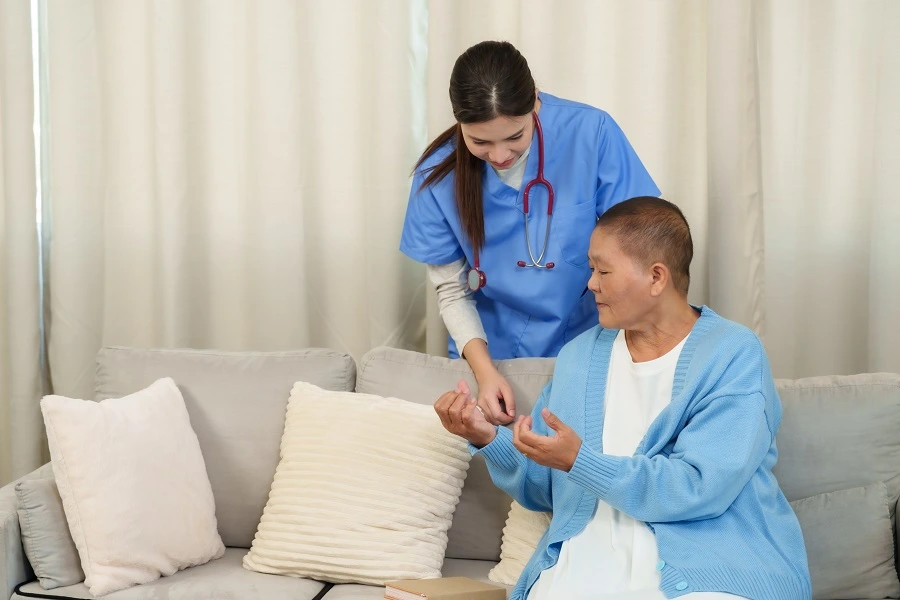
Home Health Aides (HHA): Providing Medical Expertise and Personal Support
Home Health Aides combine medical expertise with personal care to ensure patients’ well-being in the comfort of their homes. Here’s what HHAs bring to the table:
Key Responsibilities
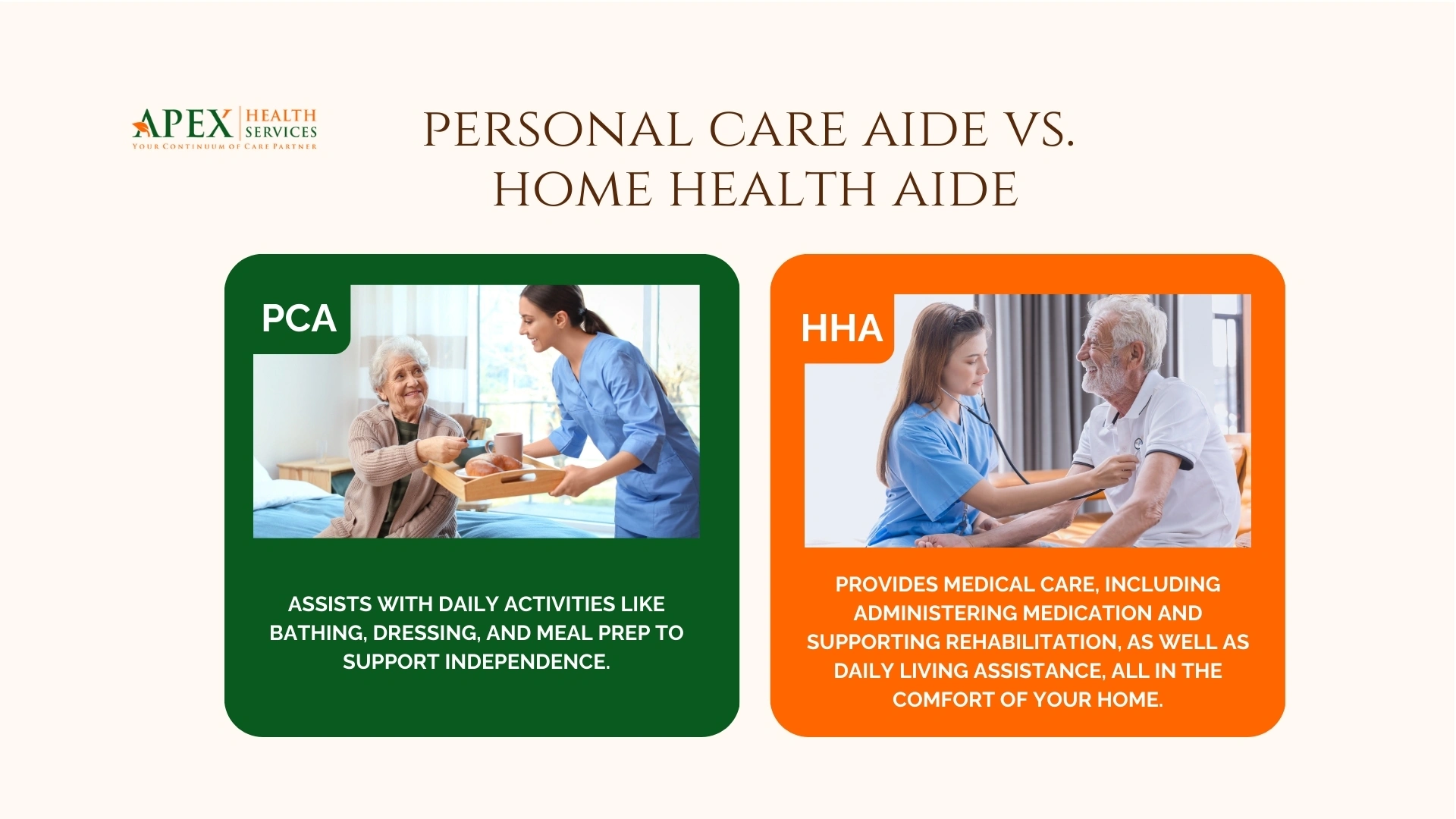
- Medical assistance: Administering medications, checking vital signs, and assisting with medical equipment such as braces or prosthetics.
- Personal care: Helping with bathing, grooming, dressing, and mobility.
- Health monitoring: Observing patients’ conditions, tracking changes, and reporting them to a supervising registered nurse (RN) or healthcare provider.
Training Requirements
With HHAs, your loved one is in good hands. HHAs must meet rigorous training and certification requirements to provide effective medical care:
- Completion of 75+ hours of formal training at community colleges or vocational schools.
- Certification exams cover topics like infection control, basic medical procedures, and anatomy.
- Continuing education to maintain and update skills.
HHAs Are Ideal for Patients Who Need:
- Assistance with medical tasks in addition to personal care.
- Support for managing chronic conditions or recovering from surgery.
- Comprehensive oversight for health and safety in the home.
Personal Care Aides (PCA): Enhancing Daily Living with Compassionate Support
Personal Care Aides focus on improving clients’ quality of life by offering non-medical assistance and emotional support.
Key Responsibilities
- Daily living assistance: Helping with meal preparation, housekeeping, errands, and mobility.
- Companionship: Providing emotional support, attending social outings, and accompanying clients to appointments.
- Encouraging independence: Supporting clients in maintaining as much autonomy as possible while helping with daily routines.
Training Requirements
Unlike HHAs, PCAs often receive basic or on-the-job training, making them more accessible:
- Minimal federal or state requirements, with training tailored to practical caregiving skills.
- Focus on interpersonal skills, such as effective communication and empathy.
PCAs Are Ideal for Patients Who Need:
- Assistance with non-medical tasks that enhance daily comfort.
- Emotional support and companionship.
- A cost-effective solution for basic care needs.
Side-by-Side Comparison: Home Health Aides (HHA) vs. Personal Care Aides (PCA)
While their roles often overlap, the specific duties and skills of each can vary based on the care environment. We’ve outlined some key attributes shared by these caregiving professionals:
- Communication: Clear and compassionate communication is vital for HHAs and PCAs. Whether they’re addressing patient concerns, collaborating with families, or following healthcare instructions, their ability to listen and respond with empathy builds trust.
- Compassion and empathy: Supporting individuals with physical or cognitive challenges requires patience and compassion. HHAs and PCAs foster meaningful relationships with their patients, providing encouragement, addressing concerns with kindness, and ensuring dignity in personal care. These connections improve the emotional well-being of patients and bring fulfillment to caregivers.
- Physical stamina: Both a home health aide and a personal care assistant handle physically demanding tasks, from contributing with mobility to helping patients with personal care needs. Their ability to stay active throughout the day is key to ensuring patients are comfortable and well-cared for in any setting.
Still Overwhelmed? Here’s How to Choose the Right Caregiver.
When deciding between a home health aide and a personal care aide, you’ll want to consider your loved one’s specific needs. For individuals with chronic conditions or post-surgical needs, an HHA is often the better choice due to their ability to perform medical tasks. On the other hand, if your loved one needs assistance with daily living but is otherwise healthy, a PCA may suffice.
At APEX Health Services, we provide compassionate care tailored to each patient's goals. Our home health aides not only ensure health and safety but also foster independence and dignity in the comfort of your home. Whether it's managing vital signs, offering companionship, or providing light housekeeping, we strive to enhance every patient’s quality of life.
FAQ
Compassionate Care Is Only One Step Away
Choosing between HHAs and PCAs is a critical decision for your loved one’s well-being. At APEX Health, we offer various home care services tailored to meet each patient’s requirements. Since 2008, our dedicated Home Health Aides have delivered exceptional medical and personal care with compassion and professionalism throughout Chicago and Illinois. Contact APEX Health today to explore care options and find the perfect plan to support your loved one’s health.
.webp)