.svg)
Families facing end-of-life care decisions often worry about the financial burden that comes with hospice services. In reality, Medicare provides comprehensive coverage for hospice care, covering most services with little to no out-of-pocket costs for beneficiaries.
At APEX Health Services, we've spent years helping Illinois families access quality hospice care in Illinois while maximizing their Medicare benefits. This guide breaks down exactly what Medicare covers, who qualifies, and how to access these essential services when your family needs them most.
What Is Medicare's Hospice Benefit?

Medicare's hospice benefit is a comprehensive program designed to provide comfort-focused care for terminally ill patients through Medicare Part A coverage. Unlike palliative care, which can be provided alongside curative treatments, hospice care focuses entirely on comfort when curative treatment is no longer the goal.
The hospice team provides medical services, nursing care, pain and symptom management, emotional support, and spiritual counseling with no inpatient hospital deductible needed. Medicare beneficiaries can receive these services at home, in a hospice facility, skilled nursing facility, or assisted living facility through Medicare-approved hospice providers.
Is Hospice Covered by Medicare Part A or B?
Medicare covers hospice care primarily through Medicare Part A (hospital insurance), which is the part of Original Medicare that handles inpatient care and certain home health services. This coverage structure means that most Medicare beneficiaries can access hospice services without additional insurance plans.
Medicare Part A: Primary Hospice Coverage
Medicare Part A handles the majority of hospice coverage, including:
- All medical services that the hospice team provides
- Pain medications and symptom management drugs
- Durable medical equipment
- Personal care assistance to help with daily activities and comfort needs
- Short-term inpatient care
Medicare Part B: Supplemental Coverage
While Medicare Part A covers hospice services, Medicare Part B continues to cover healthcare needs unrelated to the terminal illness. This includes:
- Doctor visits for non-terminal conditions
- Preventive care services
- Outpatient treatments for conditions not related to the terminal illness
- Diagnostic tests for unrelated health concerns
Medicare beneficiaries maintain both Medicare Part A and Part B coverage throughout their hospice care. The attending medical professional who provides care outside the hospice program can continue treating other health conditions.
Who Qualifies for Medicare Hospice Coverage?

To receive Medicare-covered hospice care, patients must meet specific medical and documentation requirements. The hospice doctor and the patient's regular physician work together to determine eligibility and certify the patient's condition.
Two Essential Conditions for Hospice Enrollment
A hospice doctor and the attending medical professional must certify that the patient is terminally ill with a life expectancy of six months or less to access the medicare hospice benefit.
Additionally, the patient must sign a statement choosing hospice care, opting for palliative care over any treatment intended to cure the terminal illness and related conditions.
Qualifying Medical Conditions
Many terminal illnesses qualify for the Medicare hospice benefit. Common conditions include:
- Cancer in advanced stages
- Heart failure and other cardiovascular diseases
- COPD and chronic respiratory conditions
- End-stage renal disease
- Stroke with significant complications
- Liver disease and cirrhosis
- Parkinson's disease in advanced stages
- AIDS and related complications
- Multiple sclerosis in progressive stages
- Dementia and Alzheimer's disease
- Diabetes with severe complications
Note: If your loved one has a terminal condition that we haven’t listed and their doctor believes hospice care would benefit them, speak with a hospice provider about potential eligibility.
What Medicare Covers Under the Hospice Benefit
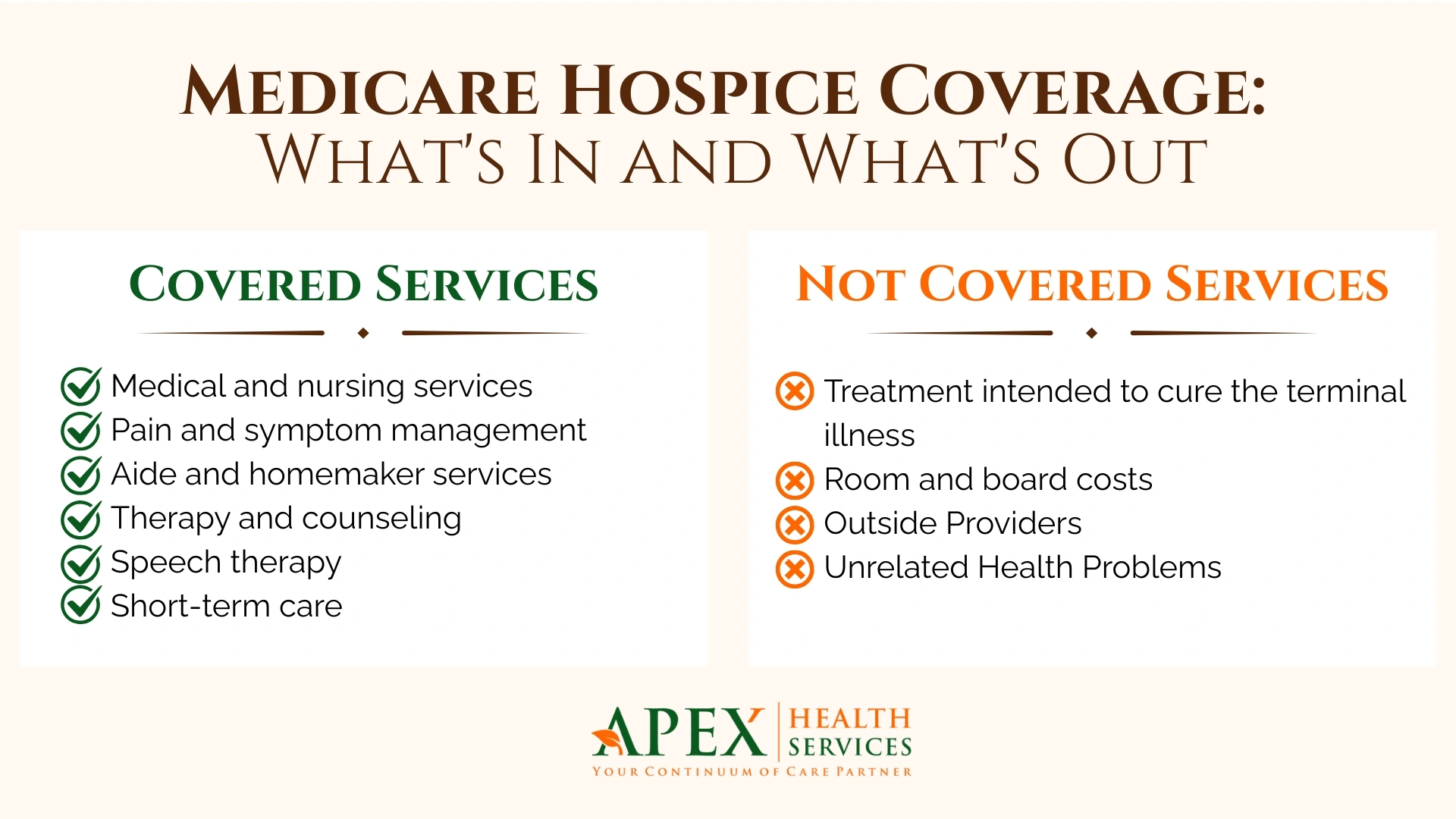
Medicare's hospice benefit provides comprehensive coverage for services related to terminal illness. The hospice care team works with the patient and their family to determine which services are necessary and arranges every aspect of the patient's care plan.
- Medical and nursing services: This includes care from the hospice doctor and skilled nursing care. The hospice physician or hospice medical director oversees the care plan.
- Pain and symptom management: All prescription drugs, medical equipment, and medical supplies needed for pain and symptom management related to the terminal illness are covered. The focus is on chronic symptom management and pain relief.
- Hospice aide: Hospice aides help with personal care services like bathing and dressing.
- Therapy and counseling: Coverage includes social work services, dietary counseling, physical therapy, occupational therapy, and spiritual and grief counseling for hospice patients and their families.
- Speech therapy: Speech-language pathology is covered when needed for symptom management, not for rehabilitation purposes. However, a hospice patient must pay for this service or use other Medicare-covered services if it isn’t related to the terminal illness.
- Short-term care: This covers inpatient respite care (up to five days) to give family caregivers a rest, and short-term inpatient care in a hospital or inpatient hospice facility for intense symptom management.
Medicare covers hospice care by paying the hospice program directly for all covered services, which minimizes out-of-pocket costs for medicare beneficiaries.
What Hospice Services Aren’t Covered by Medicare?
While Medicare's hospice benefit is comprehensive, certain hospice services and situations fall outside coverage parameters. When families are aware of these exclusions, they can plan accordingly and avoid unexpected costs.
- Treatment intended to cure the terminal illness: Choosing hospice care and signing the consent to choose hospice care means opting for non-curative comfort care over treatment intended to cure the terminal illness. Medicare will not pay for curative treatments or medications. The patient must revoke the hospice benefit to pursue curative treatment.
- Room and board costs: Medicare does not cover room and board when the patient is in their home, a nursing home, or an assisted living facility. Coverage for room and board is only available when short-term inpatient care or inpatient respite care is medically necessary and arranged by the hospice team.
- Services not arranged by the hospice team: All care for the terminal illness must be provided by or arranged by the hospice medical team. Medicare won’t cover services from outside providers.
- Other Medicare-covered services unrelated to terminal illness: The medicare hospice benefit won’t pay for services unrelated to the terminal illness. These are covered by Original Medicare (Parts A and B), but the patient pays standard costs (deductibles and coinsurance).
By understanding these limits, medicare beneficiaries can ensure they only receive Medicare-covered hospice care and avoid unexpected out-of-pocket costs.
Medicare Hospice Costs: What You'll Pay Out-of-Pocket
One of the most valuable aspects of Medicare's hospice benefit is the minimal financial burden it places on families. Unlike many healthcare services that require significant copayments and deductibles, hospice care under Medicare costs very little. Medicare pays the hospice program directly for most services.
These minimal costs ensure that hospice care is accessible to virtually all Medicare beneficiaries, regardless of their financial situation. Medicare covers the full cost of the hospice medical team services, equipment, and most medications, allowing families to focus on comfort and support during this difficult time.
How Long Will Medicare Pay for Hospice Care?
Will Medicare cover hospice for an extended time? Yes, for as long as you meet the eligibility criteria. Medicare structures hospice coverage into benefit periods.
- Initial benefit periods: You get two initial 90-day benefit periods.
- Subsequent benefit periods: After the initial periods, you get an unlimited number of 60-day benefit periods.
- Recertification: To continue receiving the medicare hospice benefits after the first six months, the hospice medical director or a hospice nurse practitioner must recertify that you’re still terminally ill. Medicare will continue to pay as long as the patient meets the requirements, meaning there isn’t a fixed limit on how long Medicare will pay for hospice care.
Medicare Advantage Plans and Hospice Coverage
Patients enrolled in Medicare Advantage plans maintain access to Medicare's hospice benefit, though the coverage structure differs slightly from Original Medicare. The relationship between Medicare Advantage and hospice care can be complex, so it's important to know how these programs work together. We’ve outlined what you need to know.
How Medicare Advantage Handles Hospice
When a Medicare Advantage plan member elects hospice care:
- Medicare Part A takes over: The Original Medicare hospice benefit automatically covers all hospice services, even for Medicare Advantage plan members.
- Medicare Advantage plan continues: The Medicare Advantage plan covers other Medicare-covered services unrelated to the terminal illness.
- Premiums still required: Patients must continue paying their Medicare Advantage plan premiums to maintain coverage for non-hospice care.
This dual coverage ensures that hospice patients receive comprehensive care for both their terminal illness and any other health conditions they may have.
Benefits of Medicare Advantage During Hospice

Some Medicare Advantage plans offer additional benefits that complement hospice care:
- Enhanced prescription drug coverage for medications unrelated to the terminal illness.
- Supplemental benefits like transportation to medical appointments.
- Care coordination services for managing multiple health conditions.
- Vision, dental, and hearing coverage that Original Medicare doesn't provide.
Not sure which is best? The hospice care team can help families navigate these options and determine the best coverage approach for their specific situation.
Steps to Access Medicare Hospice Care
Fortunately, accessing the Medicare hospice benefit is a straightforward process. It focuses on ensuring the patient qualifies and receives continuous, compassionate support. Here’s how terminally ill patients can start receiving Medicare-covered hospice care.
- Certification of terminal illness: The patient's physician and a hospice doctor must certify that you're terminally ill with a life expectancy of six months or less.
- Choose a medicare provider: Select a Medicare-approved hospice provider or a Medicare-certified hospice program in your area.
- Sign the election statement: The patient signs a statement choosing hospice care, formally electing the medicare hospice benefit instead of curative treatments.
- Initial assessment and care plan: The hospice medical team conducts an assessment to develop a personalized care plan.
- Establish the hospice team: The full hospice team, including the hospice doctor, nurses, social worker, and aides, as well as a spiritual counselor if desired, starts providing hospice services.
- Recertification for extended care: After the first six months, the hospice doctor recertifies the patient's condition at the beginning of each benefit period to continue coverage.
The process for accessing the Medicare hospice benefit is streamlined for a reason; it helps ensure that eligible terminally ill patients quickly receive the support they need. Once the required certifications are completed and the election statement is signed, the Medicare-approved hospice provider takes over managing care, allowing families to prioritize comfort and quality time.
FAQ
Partner with APEX for Comfort and Quality of Life
Medicare's hospice benefit provides crucial financial support, allowing you to focus on comfort and quality of life. The core components of the benefit, including comprehensive pain and symptom management and support services, ensure eligible terminally ill patients receive the dignity and care they deserve.
At APEX Health Services, we’re a trusted Medicare-approved hospice provider committed to delivering compassionate, high-quality hospice services across Illinois. Since 2008, our dedicated hospice care team has provided personalized care in the comfort of your home or through our hospice inpatient facility in Oswego. Contact us today to discuss your care options and get the support your family needs.
.webp)