
.svg)
Parkinson's disease changes how the body moves, but movement itself is one of the most effective tools available for managing it. At APEX Health Services, our Chicago at-home physical therapy services tailor exercises for people with Parkinson's disease based on their strength, balance, and stage of the disease.
Patients who see a movement disorder specialist at a hospital such as Rush University Medical Center or Northwestern Memorial Hospital typically pair that specialist care with a structured home exercise routine, since medication and movement work together rather than one replacing the other.
Why Physical Activity Matters for Parkinson's Disease Patients
The National Institute of Environmental Health Sciences (NIEHS), part of the National Institutes of Health, reports that moderate-to-vigorous physical activity in midlife is linked to a lower risk of developing Parkinson's disease.
For people who already have the diagnosis, exercise doesn’t reverse the underlying nerve damage. It changes how the body and brain respond to it, largely through neuroplasticity, the brain's ability to build new connections through repeated activity.
Regular exercise supports Parkinson's care in several specific ways:
- Balance and gait: Improves stability, stride length, and walking speed.
- Muscle strength: Slows the loss of strength that makes standing and climbing stairs harder over time.
- Mood and sleep: Linked to lower rates of depression and better sleep quality.
- Medication response: Supports how well standard Parkinson's medications work throughout the day.
- Daily independence: Helps patients keep control of routine tasks like cooking and bathing for longer.
Consistency is the best way to compound these effects, which is one reason the type of exercise ends up mattering almost as much as how often it happens.
Best Exercises for Parkinson's Disease Patients
A well-rounded plan draws from four categories of movement, and no single one covers every symptom on its own.
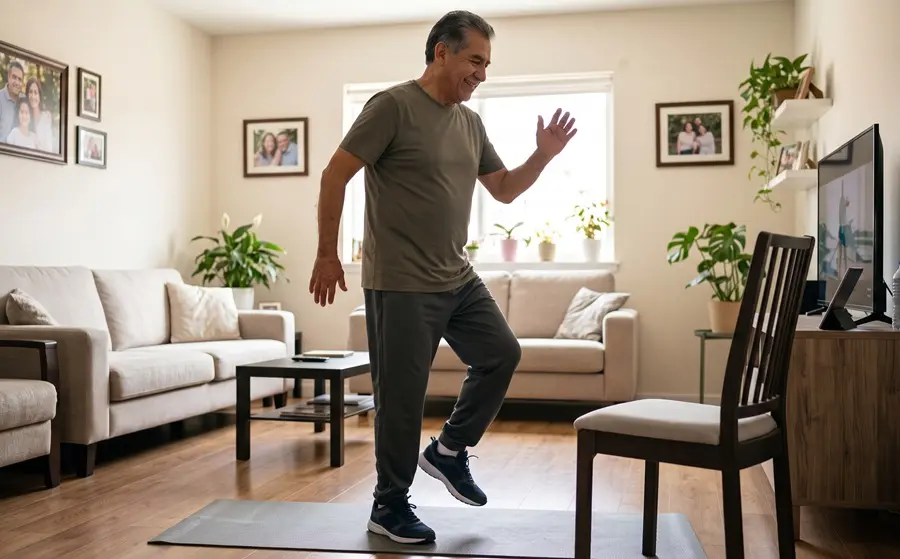
Aerobic Exercise for Parkinson's Patients
Aerobic activity raises the heart rate for a sustained period, which supports cardiovascular health and has been linked to better motor function in people with Parkinson's disease.
Walking, stationary cycling, and water-based exercise are common starting points, since they carry a lower fall risk than treadmill work or uneven outdoor terrain. A recumbent bike can still work well when standing balance is limited because it reduces fall risk while still providing a cardiovascular workout throughout the session.
Strength Exercises for Parkinson's Patients
Strength training targets the muscles used for standing up, climbing stairs, and carrying objects, the movements Parkinson's disease affects first.
Resistance bands tend to be easier to manage at home than free weights, since they can provide resistance through a comfortable range of motion without taking up much storage space. A therapist typically starts with one muscle group at a time, using sit-to-stand repetitions and step-ups to build functional strength.
Balance Exercises for Parkinson's Patients
Balance exercises retrain the automatic corrections the body makes when it starts to tip or stumble. A systematic review published through the National Institutes of Health found that structured exercise therapy produced measurable gains in balance scores and walking speed for Parkinson's patients.
A typical progression moves from supported single-leg stands near a sturdy chair, to heel-to-toe walking, to walking while counting backward. Gait training and posture work are usually built into the same sessions, since upright alignment and coordination directly affect how steady each step is.
Stretches for Parkinson's Patients
Stretching helps keep joints moving through their full range of motion and can ease the stiffness Parkinson’s disease often causes in the trunk, shoulders, and hips. Each stretch is generally held for about 30 seconds, after a short warm-up rather than on cold muscles.
Frequency matters here, but so does form. Not every category is right for every patient, and a few types of movement call for extra caution before they get added to a routine.
Exercises to Avoid for Parkinson's Disease Patients
A physical therapist should confirm what's appropriate for a specific patient before any new exercise gets added. A few categories deserve extra caution:
- High-impact or jumping exercises: Add fall risk without much added benefit for most patients.
- Hot or Bikram yoga: Raises the risk of overheating and dizziness.
- Fast, unsupported twisting movements: Can trigger a loss of balance in patients with postural instability.
- New balance exercises done alone: Safest with a therapist or caregiver present until confirmed safe.
None of these are permanent bans. They're categories that are worth a second look before becoming part of a routine.
How Exercise Needs Change by Parkinson's Stage
Every stage of Parkinson's disease benefits from staying active, but the right mix of exercise shifts as symptoms progress:
- Early stage: Higher-intensity aerobic work, resistance training, and community classes such as boxing, dance, or tai chi.
- Middle stage: Balance and fall-prevention work first, paired with shorter aerobic sessions and a cane or walker as needed.
- Advanced stage: Seated exercises, assisted standing, and gentle range-of-motion work done with a caregiver nearby.
A physical therapist adjusts the frequency and intensity here, not the four exercise categories themselves.
How Exercise Reduces Fall Risk in Parkinson's Disease Patients
The Centers for Disease Control and Prevention (CDC) reports:
- More than 1 in 4 adults age 65 and older falls each year.
- Falling once roughly doubles the chance of falling again.
- More than 95 percent of hip fractures in older adults are caused by falls, according to CDC's STEADI initiative.
That last figure is why balance work carries real weight in a Parkinson's care plan, not just general wellness value.
Exercise lowers fall risk in a specific way. Balance and strength training improve the automatic responses that help catch a stumble, while stronger muscles give those responses the power to work effectively.
Gait training also targets two Parkinson's-specific fall triggers directly: the shuffling steps that come from a shortened stride, and freezing episodes, where the feet momentarily stop responding, especially during turns or in doorways. NIEHS research links structured balance practice, including tai chi, to fewer falls in people with mild to moderate Parkinson's disease.
A clear walking path, supportive non-slip shoes, and exercising while medication is active all lower the risk further, which is why a home exercise plan and a home safety check tend to go together.
Physical Therapy Exercises for Parkinson's Disease Patients
Do home health therapists provide physical therapy exercises for patients with Parkinson's disease at home? Yes. Two service lines play different roles in making that happen.
Guided Exercise at Home
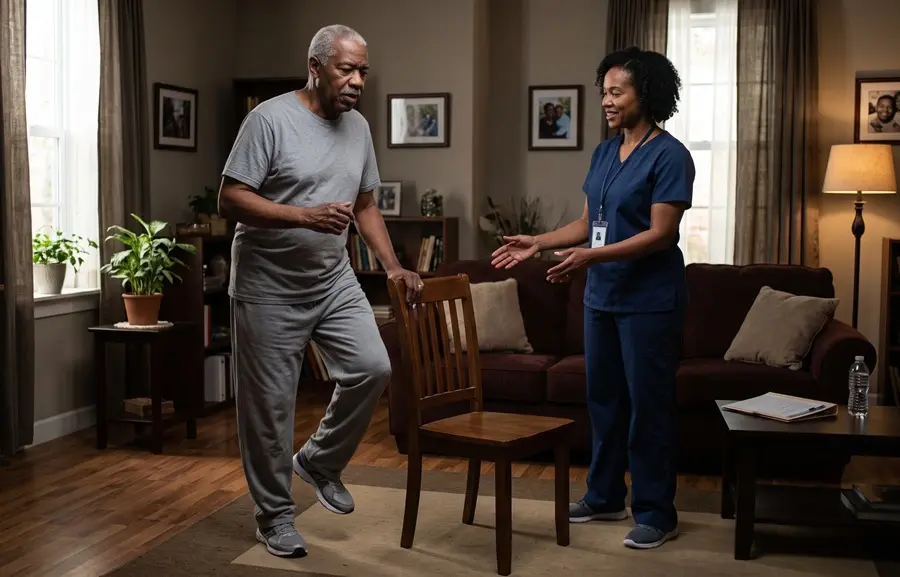
Home Health sends a licensed physical therapist to the patient's home to develop an individualized exercise program, working alongside an occupational therapist when the plan also covers daily-living tasks. That process starts with a physician's order and a hands-on evaluation of strength, balance, gait speed, and fall history, tied to a Parkinson's disease program.
The initial visit is typically scheduled within a few days of that order, so the exercise plan starts soon after the referral, not weeks later.
Non-medical Home Care can support the daily living side around that plan, such as a caregiver present during practice walks, but it doesn’t replace the physical therapist's clinical instruction. The licensed therapist handles exercise progressions and safety calls.
How Often Care Plans Are Reassessed
Physical therapists adjust exercises during routine visits as symptoms change, and the formal plan of care is recertified at each Medicare certification period. This typically happens every 60 days, when gait speed, balance, and strength are retested against the original evaluation.
Reassessment happens sooner if a patient falls, reports new symptoms, or shows a meaningful change in strength or balance. That habit of reassessing on a set schedule, and sooner when something changes, helps keep a home exercise plan realistic as the disease progresses.
Safety Tips for Exercising with Parkinson's Disease
A few precautions make home exercise safer from the first session:
- Check with a physician or physical therapist first: Especially with heart conditions, a pacemaker, or a recent fall.
- Keep a sturdy chair or counter within reach: Balance exercises are safest with support nearby.
- Stop if you feel dizzy or unsteady: Rest before continuing rather than pushing through.
- Wear supportive shoes: Avoid exercising in socks or loose slippers.
- Clear the exercise area: Remove rugs, cords, and low furniture.
- Watch for fatigue, not just pain: Medication timing affects energy, so shorten the session if needed.
These steps don’t require special equipment, just consistency that starts from the first session.
FAQ
Start Moving with the Right Support
Exercise for patients with Parkinson's disease is the most effective with a plan built around real abilities, not a generic template. A home evaluation considers actual strength, balance, and gait, then turns that into a specific routine rather than a printed handout.
APEX Health Services builds that plan and adjusts it as those abilities change over the course of treatment, so the exercises a patient does in month one aren’t necessarily the ones they are still doing in month six. Contact us to schedule a home health evaluation and start building a Parkinson's exercise plan with a licensed physical therapist.
.webp)


