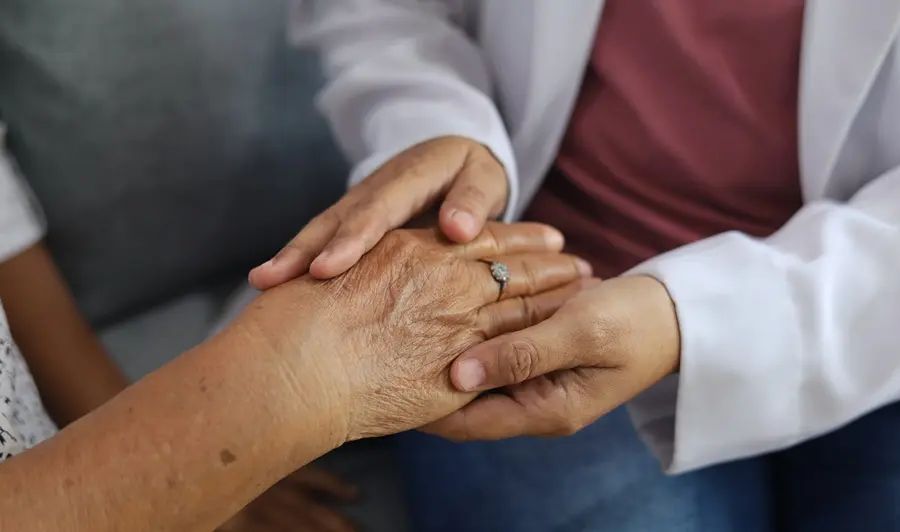
One in four adults over 65 will fall this year, according to the CDC. That risk climbs even higher for patients working with our Chicago home health services after a hospital stay. Recently hospitalized older adults are more likely to fall in the first month after discharge than those who haven't been hospitalized at all, per the CDC's STEADI program.
September marks Fall Prevention Awareness Month, making it a good time to take a closer look at what actually lowers fall risk at home. This guide from APEX Health Services covers the most common causes of falls, how home care and physical therapy help, and when a Chicago family should bring in outside support.
Fall Risk by the Numbers: What Chicago Families Should Know
Falls are the leading cause of injury among adults 65 and older, and the data backs that up:
- Over 14 million older adults fall every year, about one in four, and 37% of those falls cause an injury serious enough to need medical care, according to the CDC.
- An older adult dies from a fall every 20 minutes in the U.S., according to the Illinois Department of Public Health.
- One in five falls causes a serious injury, such as a hip fracture or head injury, per the same IDPH data.
- Falls account for 81% of traumatic brain injuries among adults 65 and older that need emergency care, hospitalization, or result in death, according to IDPH.
- Fall-related death rates among older adults rose 21% between 2018 and 2024, according to CDC mortality data.
Illinois reported one of the lowest self-reported fall rates in the country in a 2020 CDC survey, but the state's older adult population keeps growing, and so does the number of people at risk. For a city like Chicago, with dense neighborhoods, older housing stock, and long winters that bring ice and uneven sidewalks, planning for home safety is just as important as understanding the numbers.
A generic checklist only goes so far. For example, a two-flat with a narrow staircase or a Cook County bungalow with a step down into the kitchen carries a different set of hazards than a single-story suburban home.

What Causes Most Falls in Older Adults?
Falls are rarely caused by one thing. Most happen when several risk factors line up at once:
- Muscle weakness and poor balance, often from illness, surgery, or simply less activity than before.
- Vision or hearing changes that make it harder to spot a curb, a step, or a wet floor.
- Medication side effects, including dizziness or a drop in blood pressure from certain prescriptions.
- Chronic conditions such as diabetes, arthritis, or Parkinson's disease that affect gait and coordination.
- Hazards at home, including loose rugs, poor lighting, clutter, and stairs without handrails.
Any one of these raises risk on its own. Together, they explain why a person who never fell in their 60s may fall twice in a single year in their 80s. A fall risk screening with a home health nurse or a family doctor sorts out which of these apply to a specific patient, rather than treating every senior the same.
Two patients with the same diagnosis can walk away from that screening with different plans: one needs a medication review and better lighting, the other needs a walker, a grab bar, and weekly physical therapy.
Fall Risk After Surgery: Why It Spikes
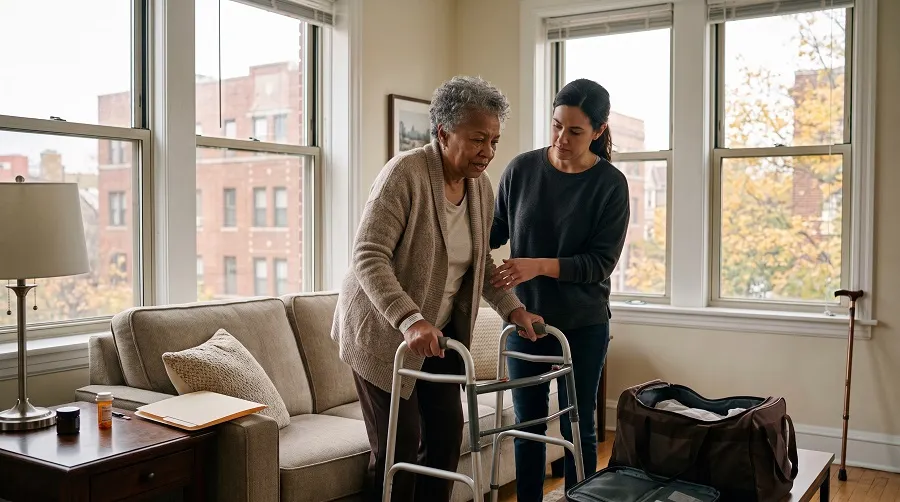
Fall risk spikes in the weeks right after a hospital stay. Recently hospitalized older adults face a higher fall rate in the first 30 days after discharge than adults who haven't been hospitalized, according to the CDC's STEADI program. A few reasons why:
- Anesthesia and new pain medication leave patients weaker and less steady.
- Days of reduced movement in the hospital erode strength and balance.
- A cane or walker still feels unfamiliar at first.
- Getting up quickly at night for the bathroom, a routine most people never think about, becomes a common trigger.
The risk of falling can stay elevated for weeks after major surgery. Hip and knee replacements, cardiac procedures, and abdominal surgery can all leave someone weaker than usual while new medications may add another layer of risk. Planning for surgery recovery at home should start before discharge, not after a fall.
Before Surgery: What to Set Up at Home
- Grab bars and a shower chair installed before discharge, not after.
- A home health evaluation scheduled to start within days of coming home.
- A current medication list ready for the care team to review.
- A caregiver or home care agency lined up in advance, not arranged from a hospital bed.
During Recovery: What a Real Plan Looks Like
Most patients leave the hospital with a folder of instructions and a follow-up appointment weeks away, with no one checking in between. A Transitional Care Program closes that gap:
- A nurse who checks strength and gait at each visit.
- A therapist who rebuilds balance before independence is expected.
- A caregiver who clears hazards before the patient has to get around them alone.
- Chronic Care Management fills the space between visits, catching a new symptom before it becomes a fall.
How Home Care Helps Prevent Falls
Home care lowers fall risk by making prevention routine instead of a response to an emergency. In a typical week, that includes:
- A walk-through of the home to remove loose rugs, cords, and clutter.
- Hands-on help with transfers, bathing, and getting in and out of bed.
- Ongoing monitoring for new dizziness, weakness, or balance changes.
- Coordination with family and physicians whenever a risk factor changes.
- Teaching the patient and family what to watch for between visits.
Home Health nurses and therapists handle the clinical side: medication reviews, strength checks, wound care after surgery. Home Care and Private Duty caregivers handle the daily side: supervision, mobility support, and a second set of eyes in the home. Neither replaces the other, and mixing the two up is a common mistake.
A non-medical caregiver can notice when someone starts to wobble or seem unsteady and flag the change, but adjusting a blood pressure medication or assessing a wound requires a licensed clinician. Together, the two notice what either one alone might miss.
How Physical Therapy Lowers Fall Risk
Physical therapy is one of the most effective single tools for lowering fall risk. Home health therapists build a program around what a patient can do right now, then adjust it as strength returns:
- Balance and gait training to correct an unsteady walk.
- Strength work for the legs and core, the muscles most falls depend on.
- Practice with stairs, transfers, and getting up from a chair safely.
- A properly fitted cane, walker, or other assistive device, recommended and adjusted as needed.
Occupational therapy fills the gap physical therapy doesn't cover: adapting a bathroom layout, recommending a shower chair, or teaching a safer way to reach a high cabinet without stretching off balance. The overlap between the two disciplines is purposeful. A patient recovering from hip surgery might see a physical therapist twice a week for gait training and an occupational therapist once a week to rework how the bedroom and bathroom are arranged.
Structured programs make a measurable difference. A supervised strength and balance program known as the Otago Exercise Program has been shown to cut falls by roughly 35% among high-risk older adults, according to research indexed by the National Institutes of Health. That kind of result depends on consistency, not one session. Plans are never left on autopilot and are reviewed every few weeks and adjusted as a patient's condition changes.
A Room-by-Room Home Safety Checklist

A few fixes account for most of the difference between a home that invites falls and one that prevents them.
Bathroom and Bedroom
- Grab bars near the toilet and inside the shower
- A non-slip mat in the tub or shower
- A clear, lit path from the bed to the bathroom
- Non-skid footwear kept within reach, not socks alone
Stairs, Hallways, and Living Areas
- Handrails secured on both sides of every staircase
- Bright lighting in hallways and entryways, with night lights where needed
- Rugs removed or secured with non-slip backing
- Cords taped down, not run across walkways
Kitchen and Entryways
- Frequently used items stored at waist height, not on a step stool
- A sturdy mat at the front and back door, checked for curling edges
- Salt or sand kept by the door for icy Chicago sidewalks and steps
When to Bring In Professional Home Care
A few signals mean it's time to ask for outside help rather than manage fall risk alone:
- A fall has already happened, even a minor one.
- New unsteadiness on stairs or standing up from a chair.
- Discharge from a hospital or surgery with mobility restrictions.
- Several chronic conditions being managed at the same time.
- A caregiver feels stretched thin trying to supervise safety alone.
Any of the above bullets is reason enough to request a home safety visit or a home health evaluation. Acting after the first fall works better than waiting for the second, and starting before a scheduled surgery is more effective than starting after discharge.
Not every fix is technical. A parent who insists a grab bar is unnecessary, or a spouse who brushes off a stumble, is protecting their independence, not being difficult. Talking about how someone can stay safe and independent at home for longer, rather than focusing on what they’ve lost, tends to be more effective than running through a checklist.
A short conversation with a home care provider before a hip or knee replacement, for example, can put a plan in place while the patient is still steady on their feet, instead of piecing one together during a stressful discharge.
FAQ
Fall Prevention Starts at Home
Fall Prevention Awareness Month is a reminder, not a deadline. Keeping a home safe matters year-round, especially for patients recovering at home after surgery, managing a chronic illness, or adjusting to the ordinary changes that come with aging. APEX Health Services supports Chicago-area families with home health, private duty home care, and chronic care management built around the specific risks each patient faces, not a one-size-fits-all checklist. Contact us today to schedule a home safety conversation with our care team.