.svg)
This month brings focused attention to a disease that remains the leading cause of death for adults across the United States and in Illinois. February is National Heart Health Month, a time that brings focused attention to a disease that remains the leading cause of death for adults across the United States and in Illinois.
Nearly half of adults live with at least one risk factor for developing heart disease, including high blood pressure, high cholesterol, smoking, obesity, or unmanaged stress.
At APEX Health Services, February is also about how you can take practical action at home. That includes supporting heart health with in-home heart failure care, monitoring blood pressure, improving blood flow, and reducing avoidable hospital stays for people with cardiovascular disease throughout Chicago and the surrounding communities.
Why February National Heart Health Month Exists

National Heart Health Month in February creates a clear opportunity to talk about how cardiovascular disease often develops quietly over time. Heart disease is not a single ailment but a collection of issues affecting the blood vessels and the heart's ability to pump blood. For many, high blood pressure (hypertension) and high cholesterol act as silent conditions because they may not show symptoms until a heart attack or stroke occurs.
Recent data highlights the urgency of heart health awareness:
- Nearly half of all American adults have some form of cardiovascular disease.
- Heart disease and stroke account for billions in annual healthcare costs and lost productivity.
- Approximately 80% of cardiovascular events are preventable through lifestyle changes and early intervention.
- Recent statistics show that certain ethnic groups, particularly Black Americans, face a 30% higher risk of death from heart-related issues than the general population.
- Cardiac arrest outside a hospital setting has a survival rate of less than 10%, emphasizing the need for fast response and prevention.
National Heart Health Month also aligns with initiatives such as Wear Red Week. This highlights the impact of heart disease on women, who often experience different symptoms of heart attack and cardiac arrest than men.
Heart Diseases: Common Conditions and Why They Are Dangerous
Heart disease isn’t one condition; it includes several cardiovascular diseases that affect the heart, blood vessels, and arteries. These conditions disrupt blood flow, increase plaque buildup, and raise the risk of heart attack, stroke, and death.
Common heart-related diseases and problems include:
- High blood pressure (hypertension): Damages blood vessels over time and strains the heart muscle.
- High cholesterol: Leads to plaque buildup in arteries and reduced blood flow.
- Coronary artery disease: Narrows arteries and raises the risk of a heart attack.
- Heart failure: Limits the heart’s ability to pump blood efficiently.
- Cardiac arrest: Sudden loss of heart function requiring immediate care.
- Stroke: Often linked to blocked or ruptured blood vessels supplying the brain.
Did you know that nearly half of adults live with hypertension or elevated blood pressure? Uncontrolled blood pressure contributes directly to cardiovascular disease, kidney damage, and cognitive decline. Smoking, obesity, excess sodium intake, stress, and limited physical activity further increase risk.
Practical Tips to Support Heart Health
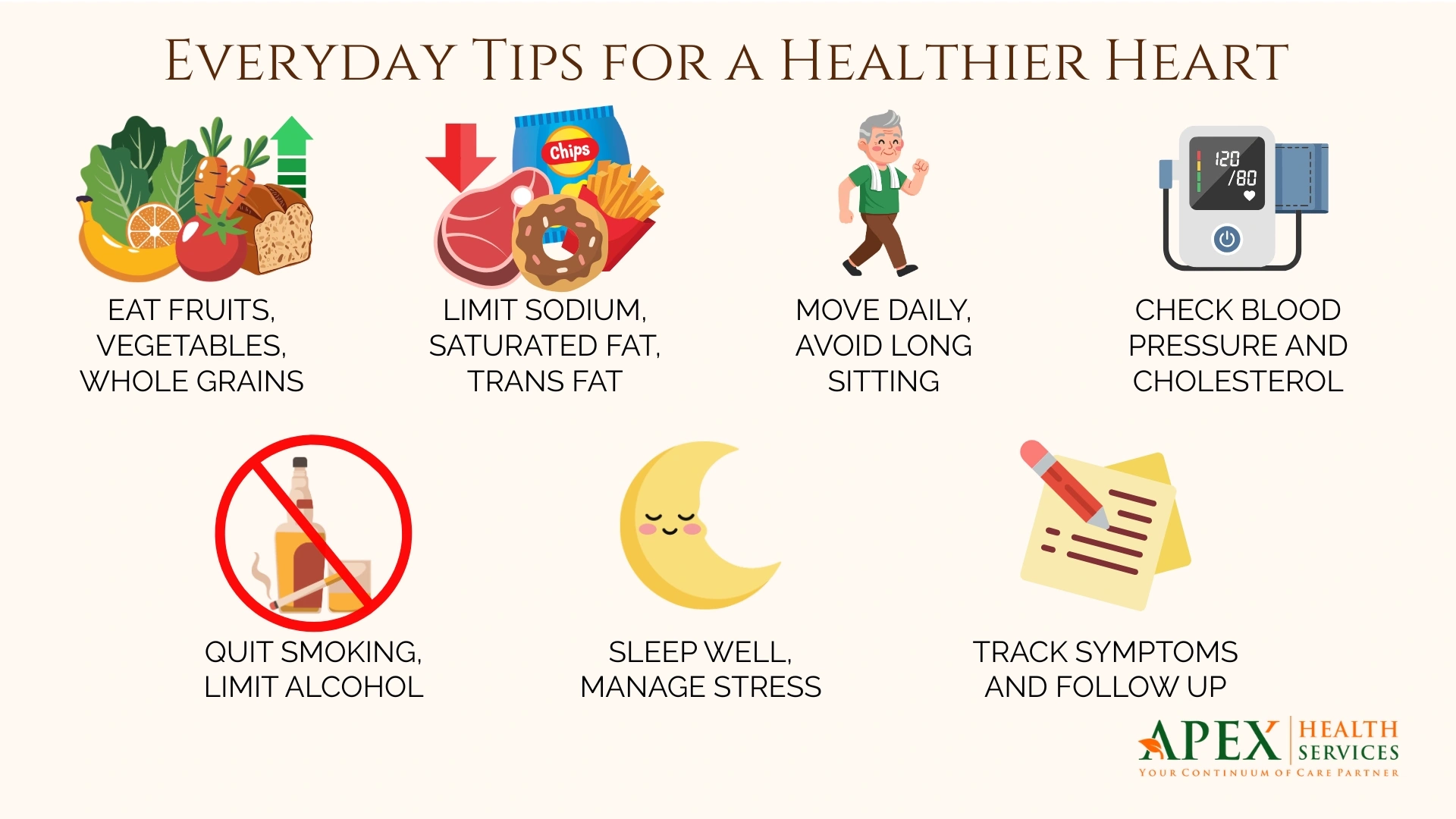
Thankfully, the power to change your heart health often starts with factors like daily habits, medical care, and community resources. National Heart Health Month highlights realistic steps that support cardiovascular health over time.
Nutrition and Heart-Healthy Foods
Food choices affect blood vessels, cholesterol levels, and blood flow. Here are our recommendations.
- Eat more fruits, vegetables, and whole grains throughout the week.
- Limit saturated fat and avoid trans fat to reduce plaque buildup in arteries.
- Choose lean proteins such as fish, poultry, beans, and legumes.
- Reduce sodium intake to help control blood pressure.
- Watch portion sizes to support a healthy weight.
Balanced meals built around vegetables, grains, and fiber-rich foods support heart disease prevention and overall health.
Physical Activity and Daily Movement
Physical therapy plays a significant role in heart rehabilitation, improving circulation and overall heart function. Regular movement is a great way to help the heart pump more efficiently and support healthy blood pressure.
- Aim for moderate exercise most days of the week, such as walking or cycling.
- Break activity into short sessions if endurance is limited.
- Include gentle strength or physical therapy when approved by a doctor.
- Avoid long periods of sitting when possible.
Even light activity improves circulation and lowers risk factors linked to cardiovascular disease.
Blood Pressure and Cholesterol Control

Managing numbers reduces strain on the heart and blood vessels:
- Check blood pressure regularly at home or during visits.
- Take prescribed medication consistently.
- Track cholesterol levels during routine medical care.
- Report sudden changes such as dizziness, swelling, or fatigue.
High blood pressure and high cholesterol often show no symptoms, yet both increase the risk of heart attack and stroke.
Lifestyle Habits That Reduce Risk
Daily choices play a major role in preventing heart disease:
- Quit smoking to improve oxygen delivery and blood vessel function.
- Limit alcohol intake to protect heart rhythm and blood pressure.
- Manage stress through rest, routines, and social support.
- Maintain regular sleep patterns to support recovery and heart rhythm.
Lifestyle changes made gradually usually last longer and support long-term well-being.
Care and Monitoring at Home

Consistent medical oversight helps detect issues early:
- Attend follow-up visits after hospital discharge.
- Monitor weight and symptoms linked to heart failure.
- Use in-home monitoring for blood pressure and vital signs when recommended.
- Ask about Medicare-supported programs such as Chronic Care Management.
Home-based care lowers the risk of complications that lead to emergency visits. After heart surgeries or during heart failure progression, skilled nursing can help with medication management, wound care, and symptom monitoring.
Community Programs and Public Health Resources
Local and national efforts support heart disease prevention:
- Participate in American Heart Month and Wear Red awareness events.
- Use education tools from the American Heart Association.
- Access Illinois’ Department of Public Health screening programs.
- Take part in community nutrition and exercise initiatives.
National Heart Health Month in February revolves around a common goal across communities: reducing heart disease and supporting longer, healthier lives.
How In-Home Monitoring Reduces Hospital Readmissions
A primary concern for patients leaving the hospital after a cardiac event is the risk of returning within 30 days. In-home monitoring serves as a safety net. By tracking vitals like weight, blood pressure, and oxygen levels daily, home health clinicians can catch small changes before they become emergencies.
For example, a sudden two-pound weight gain in 24 hours often signals fluid retention — a precursor to a heart failure flare-up. Detecting this early allows the doctor to adjust medication over the phone, preventing a trip to the emergency room. This proactive approach keeps the patient in their preferred environment, reduces strain on local hospitals, and helps patients stay at home where they are safe.
Signs a Heart Patient May Need Home Health Services
Certain signs suggest that home health services can support heart patients more effectively than clinic-only care. These indicators often appear after hospitalization or during disease progression.
Common signs include:
- Frequent hospital admissions for heart failure or cardiac symptoms.
- Uncontrolled blood pressure despite medication.
- Shortness of breath, swelling, or fatigue affecting daily life.
- Difficulty managing medications or follow-up appointments.
- Weight changes linked to fluid retention.
- Decline in mobility or the ability to perform daily activities.
Illinois Act 96-1521 supports post-hospital care coordination by setting discharge planning standards that help reduce preventable readmissions. Hospitals and certified home health agencies follow discharge planning standards designed to support at-home recovery.
Chicago Heart Health Data and Public Health Efforts
The city of Chicago faces unique challenges regarding heart health.
- Chicago heart disease rate: In some South Side communities, the rate of death from heart-related causes is double the national average.
- Local laws: The Chicago "Clean Indoor Air Ordinance" has been instrumental in reducing secondhand smoking exposure, a known risk factor for heart disease.
- Community goals: The "Healthy Chicago 2025" plan aims to close the life expectancy gap by focusing on hypertension control in high-risk adults.
According to the Chicago Health Atlas, heart disease mortality rates vary significantly by neighborhood, often linked to access to fresh foods and primary care.
FAQ
National Heart Health Month: A United Goal
While February is American Heart Month, heart health should be a year-round goal and priority. Prevention, early detection, and consistent care support longer life and improved overall health. At APEX HealthCare Services, we integrate in-home monitoring for heart patients to track key vital signs and detect early signs of complications. This proactive approach helps prevent hospital readmissions and ensures continuous care, providing peace of mind for both patients and their families.
APEX HealthCare Services is certified in palliative heart failure care, offering advanced symptom management, medication oversight, and coordinated support for patients living with advanced cardiovascular disease. Our palliative care focuses on comfort, stability, and quality of life while continuing medical treatment. Contact us.
.webp)